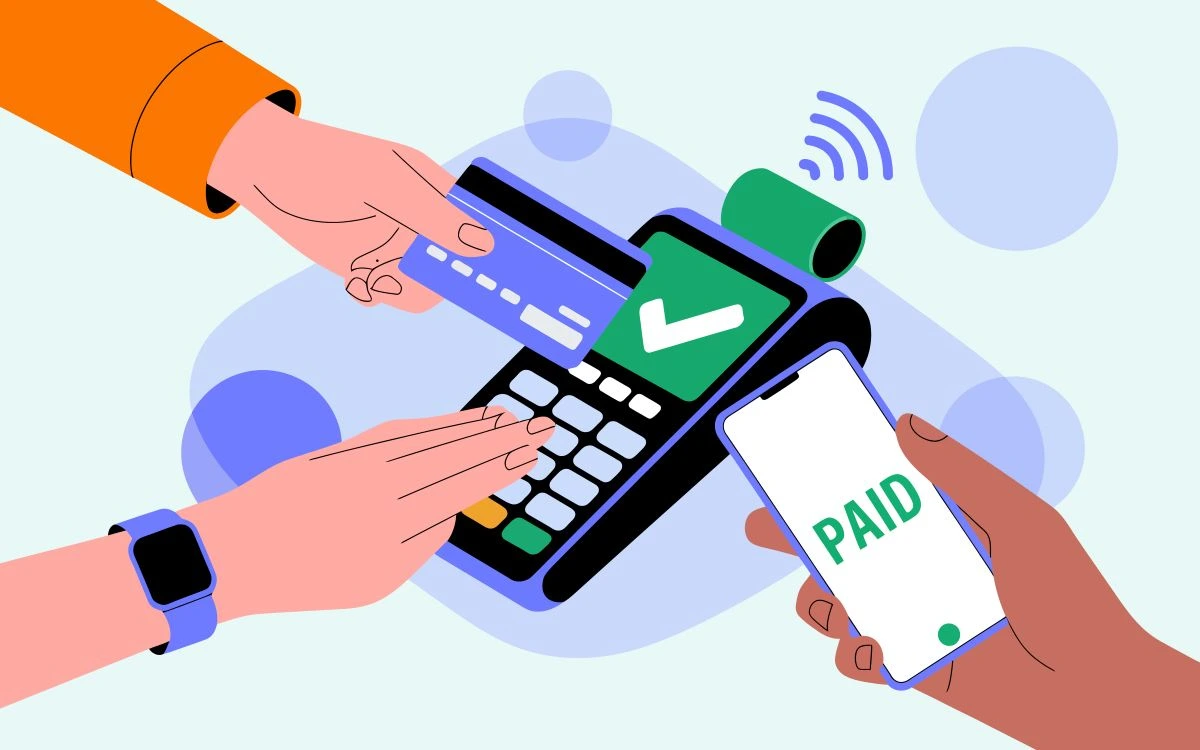
Payment industry trends shaping 2026 for merchants
In 2026, the winners won’t be the businesses that add “more payment options,” but the ones that build a smart payment strategy: local-first checkout, real-time decisioning, tighter fraud controls, and smoother cross-border experiences.
Below are the biggest shifts from 2025 that are setting the direction for 2026—especially for ecommerce, SaaS, marketplaces, education, and travel merchants.
Key payment industry trends in 2025 that will shape 2026
The rise of digital wallets and mobile payments
In many Asia‑Pacific and emerging markets, digital wallets are becoming the default online payment method—because they reduce friction (no card entry) and fit mobile-first shopping. In emerging markets, wallets are often powered by mobile money, which has become a backbone for everyday commerce. Localization is not just technical; it’s about support. Solumize Multiflow Agents act as expert checkout guides, recognizing the user's country to resolve specific queries about local wallets or mobile money in real-time, ensuring purchase intent isn't lost due to process confusion.
A useful signal of scale: according to GSMA, in 2024, mobile money processed ~108 billion transactions worth over $1.68 trillion, and the industry passed 2+ billion registered accounts with 500+ million monthly active accounts.
For merchants, the 2026 implication is clear: wallet-led checkout isn’t a feature—it’s a conversion driver. And wallet behaviour varies by market, so “one global checkout” underperforms compared to a localised approach. If you’re planning expansion, start by mapping the local payment methods your customers already use.
Adoption of AI and machine learning in payment processing
Industry reports show increasing adoption of AI for payment routing, fraud detection and authentication, particularly among large enterprise merchants in 2025.
What this means for 2026: merchants should expect more automation everywhere—but also more scrutiny around governance, transparency, and customer outcomes.
The expansion of buy now, pay later (BNPL) solutions
BNPL is expected to keep expanding in 2026, but with tighter compliance, clearer disclosures, and more robust refund flows—especially in markets where regulators are bringing BNPL closer to traditional consumer credit standards. In the UK, HM Treasury has announced new BNPL rules that include affordability checks and faster access to refunds, alongside a broader programme to modernise the Consumer Credit Act framework.
The FCA has also set out a timeline to begin regulating deferred payment credit (often known as BNPL) in 2026, signalling continued regulatory focus as the model matures.
Cross-border payments and the role of local payment methods
Cross-border commerce and payments are scaling fast—and merchants feel increasing pressure to make international checkout feel local. The Bank of England forecasts the value of cross-border payments will grow from almost $150 trillion (2017) to over $250 trillion by 2027. At the same time, cross-border payments can still be slower, costlier, and less transparent than domestic payments—sometimes taking up to 10 days and costing more than 10% of the payment value in certain cases.
For merchants, the biggest practical trend is local rails: customers want to pay the way they pay at home (bank-to-bank schemes, QR networks, local wallets, mobile money).
If your goal is to scale internationally, think beyond “cards + PayPal” and build a market-by-market acceptance plan. A good starting point is how you accept electronic payments today, and where local methods should be prioritised next.
The growth of frictionless payments in e-commerce
In online checkout, the shift isn’t really about “contactless” in the NFC sense—it’s about making card and wallet payments feel effortless. That’s why more merchants are adopting network tokenization (replacing stored card numbers with network-issued tokens) and adding Click-to-Pay to simplify returning-customer purchases and reduce manual card entry.
Going into 2026, “secure convenience” will keep setting the standard: more tokenized credentials by default, smoother Click to Pay experiences, fewer password-heavy steps, and more device-based authentication and behind-the-scenes risk controls.
How these payment trends are evolving in Asia and Africa
Asia and Africa are where payment innovation becomes very practical: the dominant methods are often local-first and mobile-first.
- Southeast Asia is increasingly shaped by national QR standards and domestic real-time rails. PwC notes that seven out of ten Southeast Asian countries have implemented national QR code standards—creating a foundation for broader interoperability. The region is also advancing cross-border links between instant payment systems and QR ecosystems (for example, PayNow–PromptPay connectivity and cross-border QR usage via networks such as DuitNow/QRIS/PromptPay), which helps merchants serve travellers and cross-border shoppers with more familiar ‘local’ experiences.
- Africa continues to lead in mobile money adoption and usage. GSMA reports that Sub-Saharan Africa remains the epicentre of mobile money, and in 2024 the region processed about 80 billion mobile money transactions worth roughly $1.1 trillion, highlighting how wallet- and mobile-first behaviours shape everyday commerce in many markets.
Opportunities and challenges for merchants
Opportunities
- Higher conversion through local relevance: showing the right local method first (by country/device) can reduce checkout abandonment.
- Better approval rates with smarter stacks: tokenization + dynamic routing + modern authentication reduces friction and false declines.
- New customer segments: wallet ecosystems and mobile money can unlock buyers who don’t prefer cards (or don’t have them).
- Operational efficiency: real-time confirmation and better payment status handling can speed fulfilment and reduce support tickets.
Challenges
- Fragmentation: each market has different rails, UX norms, and settlement realities—creating integration and reconciliation complexity.
- Fraud pressure: fraud is rising in multiple regions and tactics are becoming more sophisticated. In the European Economic Area, the ECB reports that payment fraud increased to €4.2 billion in 2024, up from €3.5 billion in 2023, even though strong customer authentication remains effective against the fraud types it was designed to mitigate.
- Regulatory change: BNPL and other products face increasing oversight; your checkout and refund flows must keep pace.
- Cross-border costs and transparency: improving, but still uneven—interoperability and standards work is ongoing.
If you run a marketplace or have operational disbursements (partners, sellers, suppliers, refunds at scale), don’t treat payouts as an afterthought—align acceptance with global payouts so the full money movement lifecycle stays consistent.
References:
Bank of England. (2023, March 29). Making progress on cross-border payments – remarks by Victoria Cleland. https://www.bankofengland.co.uk/speech/2023/march/victoria-cleland-pre-recorded-panellist-at-the-silk-road-cash-payments-conference
Financial Conduct Authority. (2025, September 29). Regulating Buy Now Pay Later (BNPL). https://www.fca.org.uk/firms/regulating-buy-now-pay-later
GSMA. (2025). The State of the Industry Report on Mobile Money 2025 [PDF]. https://www.gsma.com/sotir/wp-content/uploads/2025/04/The-State-of-the-Industry-Report-2025_English.pdf
HM Treasury. (2025, May 19). New rules to end Buy-Now, Pay-Later wild-west, protect millions of shoppers and drive growth. GOV.UK. https://www.gov.uk/government/news/new-rules-to-end-buy-now-pay-later-wild-west-protect-millions-of-shoppers-and-drive-growth
HM Treasury. (2025, May 19). Consultation on Consumer Credit Act 1974 (CCA) reform. https://www.gov.uk/government/consultations/consultation-on-consumer-credit-act-1974-cca-reform
PwC. (n.d.). Payments 2025 and beyond: Evolution to revolution. https://www.pwc.com/sg/en/financial-services/fintech/payments-2025-and-beyond.html
Reuters. (2025, December 15). ECB: Payment fraud rises to 4.2 bln eur in 2024, strong authentication remains effective. https://www.reuters.com/business/ecb-payment-fraud-rises-42-bln-eur-2024-strong-authentication-remains-effective-2025-12-15/
DuitNow. (n.d.). Cross-Border QR Payment. https://www.duitnow.my/Cross-Border/index.html
Mastercard. (2024, June 11). Say goodbye to manual card entry: We’re ushering in a new era of one-click online payments. https://www.mastercard.com/us/en/news-and-trends/stories/2025/one-click-checkout.html
EMVCo. (n.d.). EMV® payment tokenisation. https://www.emvco.com/emv-technologies/payment-tokenisation/

Recent Posts