Payment methods in Asia: The ultimate guide to expanding into the APAC market
For merchants, platforms and digital businesses expanding into APAC, adapting to Asia payment methods means building checkout flows that match local user behaviour while keeping control over transaction processing, FX, currencies and settlements.
Main types of payment options in Asia
APAC is not a single payment market. Each country has its own user expectations, banking infrastructure, wallet ecosystem and regulatory environment. A payment strategy that works in Singapore may not be enough for Indonesia, Malaysia, India or China.
The main payment options Asia-based businesses should consider include:
- Bank transfers and account-to-account payments: widely used for online payments, deposits and high-trust transactions. Local Bank transfers are especially relevant where users prefer confirming payments through their banking app.
- Real-time payment rails: systems such as UPI in India, PromptPay in Thailand, DuitNow in Malaysia and QRIS in Indonesia enable faster domestic payment experiences.
- QR payments: common across mobile-first markets and useful for both app-based and hosted checkout flows.
- E-wallets: methods such as OVO, DANA, ShopeePay and Grab Pay are central to digital commerce in several markets.
- Cards and domestic schemes: international cards remain relevant, but local schemes such as RuPay, UnionPay and JCB can improve domestic reach.
For enterprise merchants, the objective is not to add every possible method, but to build a payment infrastructure that balances conversion, compliance, reporting, reliability and settlement control.
Why local payment methods matter for APAC expansion
Local payment methods matter because payment preference directly affects checkout completion. Many users in Asia do not default to international cards. They expect to pay through local wallets, bank apps, QR codes or domestic transfer systems.
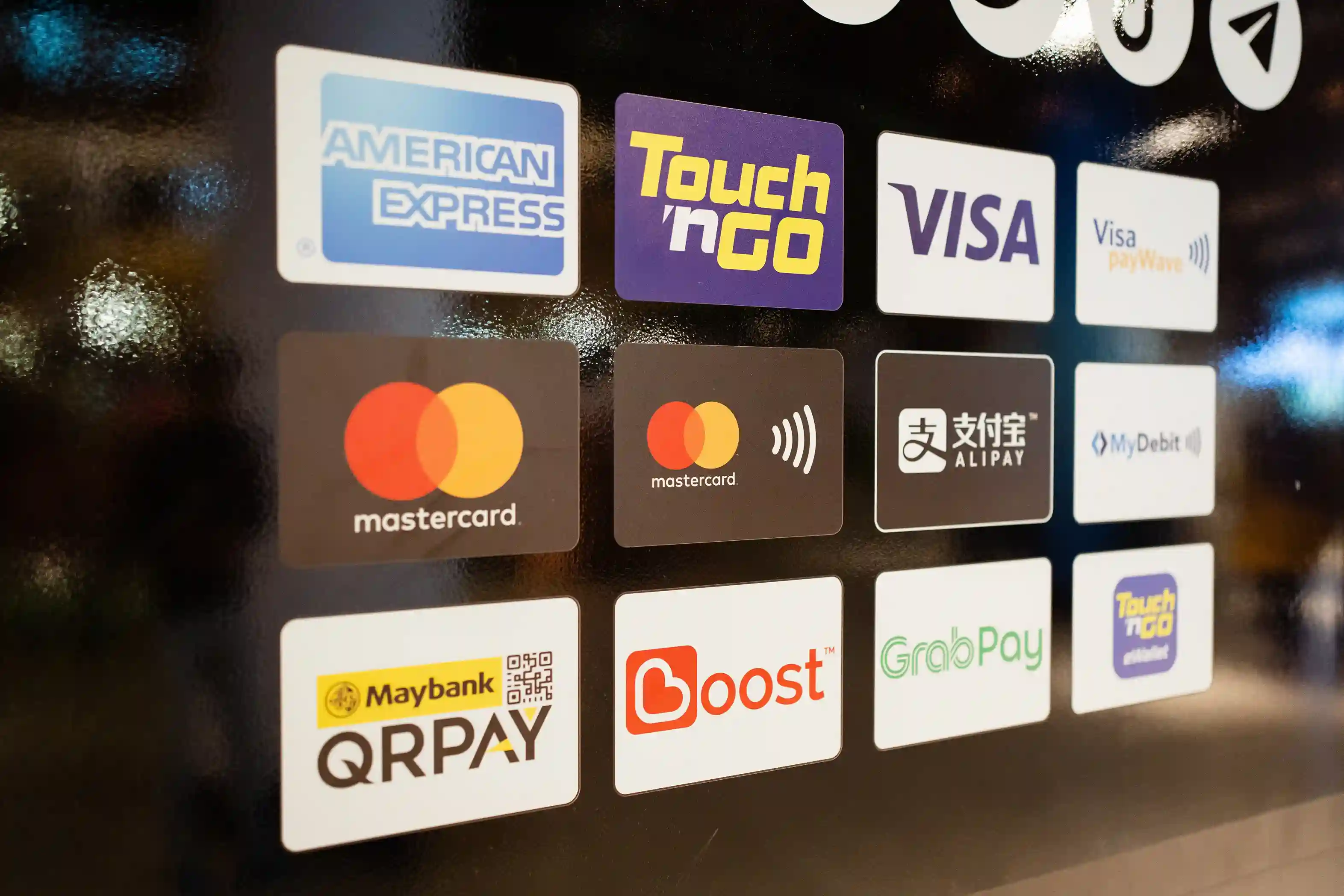
For example, a merchant expanding into Malaysia may need FPX, DuitNow, Boost or Touch 'n Go. In Indonesia, users may expect QRIS, OVO, DANA, ShopeePay or bank transfers. In China, Alipay, WeChat Pay and UnionPay are essential for digital payments.
For merchants and platforms, local payment methods can support:
- Higher checkout relevance;
- Broader user coverage;
- Fewer failed or abandoned payments;
- Access to users without international cards;
- Better alignment with domestic payment behavior.
In APAC, payment localization is not just a UX decision. It is a core part of market entry infrastructure.
Most popular payment methods in Asia by country
Malaysia: FPX, DuitNow, Boost, GrabPay and Touch ’n Go
Malaysia combines online banking payments, QR infrastructure and wallet adoption. FPX is widely used for bank-based online payments, while DuitNow supports real-time transfers and QR payment experiences. Wallets such as Boost, GrabPay and Touch ’n Go are relevant for mobile-first users.
For platforms, Malaysia shows why both banking rails and wallet-based options should be available through a single payment gateway integration.
Indonesia: QRIS, OVO, DANA, ShopeePay and Bank Transfers
Indonesia is a major QR and wallet-led market. QRIS, developed under Bank Indonesia’s national standard, helps unify QR acceptance across banks and payment service providers.
Merchants should also consider OVO, DANA, ShopeePay and local bank transfers. The best mix depends on the business model, user profile, device usage and transaction value.
Thailand: PromptPay, TrueMoney and Local Bank Transfers
Thailand’s PromptPay infrastructure supports real-time domestic payments and QR-based payment flows. TrueMoney is also a relevant wallet for digital commerce, especially in mobile-heavy environments.
For merchants, Thailand requires strong payment status tracking because local payment flows may involve user confirmation outside the merchant’s checkout.
Vietnam: MoMo, ZaloPay, VietQR and Domestic Bank Transfers
Vietnam combines wallets, QR payments and domestic transfers. MoMo and ZaloPay are important wallet options, while VietQR and domestic banking infrastructure support QR and transfer-based payments.
A localized checkout should provide clear payment instructions, support pending states and reconcile confirmations accurately.
Philippines: GCash, Maya and QR-Based Payments
The Philippines has a strong wallet and QR payment ecosystem. GCash and Maya are among the most recognized mobile payment options, while QR-based payments support broader digital adoption.
For merchants, wallet acceptance can be critical when targeting users who prefer mobile payment experiences over card entry.
India: UPI, RuPay and Real-Time Payment Rails
India is one of the world’s leading real-time payment markets. UPI, operated by NPCI, enables instant mobile interbank transactions and is central to merchant payments, app checkout and digital commerce.
RuPay also plays an important role as a domestic card scheme. Any APAC payment strategy that includes India should treat UPI as a core payment rail, not an optional alternative.
China: Alipay, WeChat Pay and UnionPay
China’s payment ecosystem is led by digital wallets and domestic card infrastructure. Alipay and WeChat Pay are deeply embedded in online and mobile commerce, while UnionPay remains a key card network.
For international platforms, China requires localized checkout flows, compatible settlement logic and operational visibility across wallet and card payments.
Singapore, South Korea and Japan: wallets, cards and local schemes
Singapore, South Korea and Japan are mature payment markets where cards remain important, but local schemes, QR payments, wallets and bank-based rails also matter.
Singapore has PayNow and SGQR, South Korea has a sophisticated card and mobile payment environment, and Japan combines cards, bank transfers, e-money, QR payments and JCB. For enterprise merchants, these markets require a balanced approach rather than a card-only strategy.
Technical considerations for accepting payments in Asia
Payment method availability by country
Payment methods APAC-wide vary significantly by country, merchant configuration and provider coverage. Merchants should avoid hardcoding static checkout options and instead rely on dynamic payment method availability.
A scalable integration should check which methods are active for each country and payment flow before showing them to the user. This reduces friction and prevents failed payments caused by unavailable methods.
Checkout flow and user experience
Checkout should adapt to the selected method. Some payment methods can be completed directly on the merchant site, while others require redirect, QR display, hosted checkout or confirmation through an external app.
A strong APAC checkout experience should:
- Show country-relevant payment methods;
- Work well on mobile devices;
- Display QR codes or payment references clearly;
- Explain pending payment states;
- Redirect users securely when needed;
- Return users to clear success, pending or failure pages.
For platforms processing high transaction volumes, checkout design is a technical conversion lever.
Payment status tracking and reconciliation
Many local payment flows are asynchronous. A transaction may be created, remain pending and then move to completed once the user confirms the payment externally.
Merchants therefore need reliable payment status tracking, webhooks or API-based updates, transaction identifiers and reconciliation logic. Finance teams should be able to match payment records, fees, currencies and settlement data without relying on manual checks.
In APAC, reconciliation is not a back-office detail. It is essential for scaling payment operations.
FX, currencies and settlements in APAC
Local collection currency vs settlement currency
APAC expansion introduces currency complexity. A merchant may collect in Malaysian ringgit, Indonesian rupiah, Thai baht, Vietnamese dong, Philippine peso, Indian rupee, Chinese yuan, Singapore dollar, Korean won or Japanese yen, while settling in another currency.
Local collection currency improves user trust because customers see familiar pricing and payment flows. Settlement currency affects treasury, accounting, FX exposure and reporting.
Payment infrastructure should therefore provide visibility over local amounts, exchange rates, converted values and settlement currency.
Settlement timing and operational visibility
Settlement timing depends on the payment method, country, banking infrastructure, processor and merchant configuration. Finance teams need to know when funds are collected, when they are confirmed, which fees apply and when settlement becomes available.
Operational visibility should include:
- Transaction status;
- Payment method;
- Local amount and currency;
- Settlement amount and currency;
- Fees;
- Provider references;
- Exportable or API-accessible reconciliation data.
For enterprise merchants, settlement visibility is a requirement for financial control, not just a reporting feature.
How to choose the right payment methods for APAC expansion
The right Asia payment methods strategy should be built market by market. Merchants should prioritize payment methods based on user behavior, technical complexity, cost, settlement needs and operational readiness.
A practical framework is:
- Map target countries and currencies.
- Identify dominant local payment behaviors.
- Prioritize trusted local methods first.
- Validate checkout flow and integration requirements.
- Review FX, fees and settlement implications.
- Automate reconciliation from the start.
- Monitor conversion, failed payments and pending rates by method.
For merchants, platforms and digital businesses, APAC payment expansion works best when local payment relevance is combined with centralized infrastructure, that is, with a comprehensive payment gateway in Asia. The goal is not only to accept more payment methods, but to process, track and settle them reliably at scale.
References:
Bank Indonesia. (n.d.). Quick Response Code Indonesian Standard (QRIS). https://www.bi.go.id/en/fungsi-utama/sistem-pembayaran/ritel/kanal-layanan/qris/default.aspx
National Payments Corporation of India. (n.d.). UPI: Unified Payments Interface. https://www.npci.org.in/product/upi
Bank of Thailand. (n.d.). PromptPay. https://www.bot.or.th/en/financial-innovation/digital-finance/digital-payment/promptpay.html
Bangko Sentral ng Pilipinas. (2024). 2024 Report on E-payments Measurement. https://www.bsp.gov.ph/PaymentAndSettlement/2024_Report_on_E-payments_Measurement.pdf
World Bank. (2025). The Global Findex Database 2025. https://www.worldbank.org/en/publication/globalfindex

Recent Posts